
How to Make Risotto: Easy, Creamy Risotto Recipe
I love Italy and its risotto. Over the years, I have had what might have been the best week’s worth of meals of my life in Italy and also one of the most disappointing. The difference was the region.
That is the magic of Italian cuisine. It is deeply local and proudly regional.
We have spent many trips exploring Italy, and I am completely obsessed with Northern Italy. It might just be my favorite place in Europe, between Milan, the Dolomites, and Venice. There is something about that part of the country that feels so comforting. When it comes to comfort, nothing represents Northern Italy quite like a proper risotto recipe.
Venice is known for its risotto, often infused with seafood flavors, saffron, or delicate broths that reflect the lagoon’s influence. One rainy winter night in Venice, we had one of the best meals of our lives in a tiny restaurant. The rain wouldn’t stop, so we squeezed into a small outdoor table tucked under an awning to escape it. We ordered a seafood risotto, ironically without actual seafood pieces in it, along with lasagna and tiramisu.
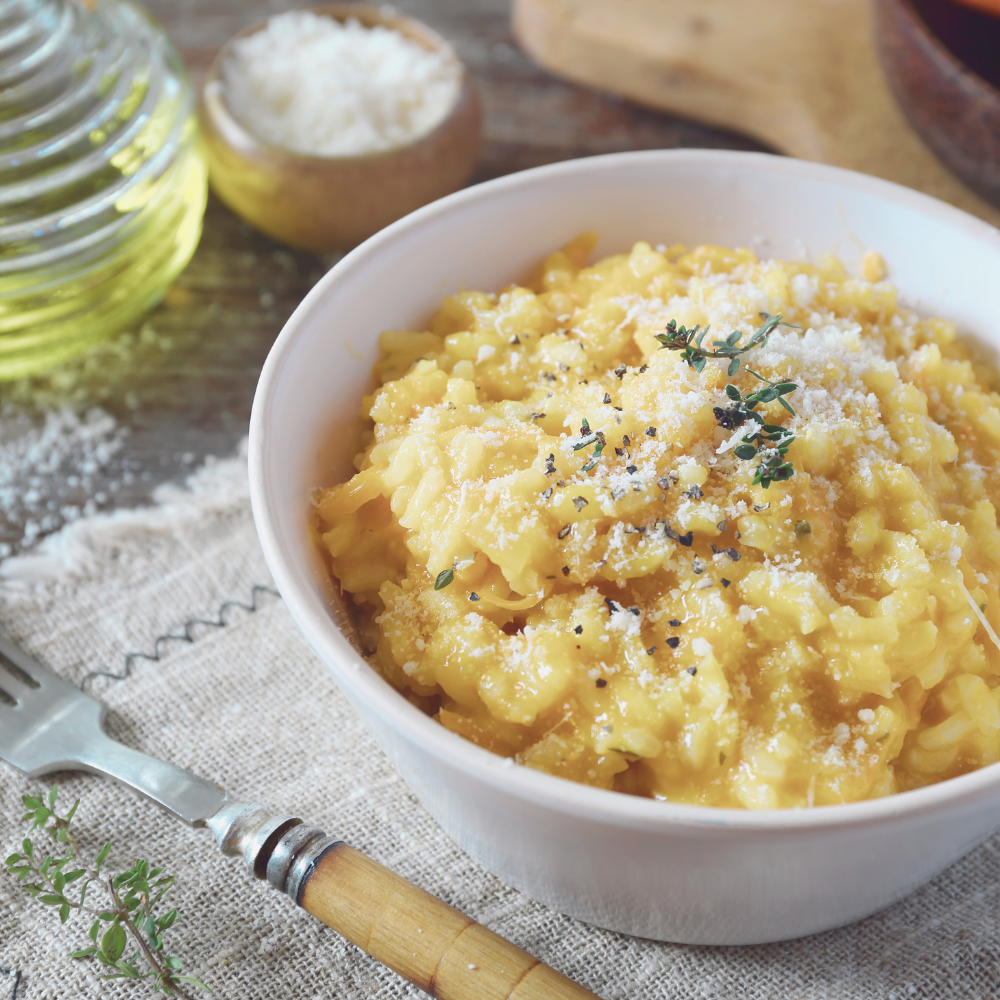
I could eat that meal for the rest of my life.
The risotto was delicious. Instead of being packed with shellfish, it carried the flavor of the sea through the broth alone. It tasted like the ocean in the most delicate and elegant way. To this day, I am not entirely sure how the Venetians achieve that depth of flavor so effortlessly, but it completely changed how I think about making a risotto recipe at home.
Later, I was reminded of that same feeling in a totally different part of the world, Mozambique. In a tiny two-table restaurant that was actually a woman’s backyard, a local cook prepared a brothy seafood rice for us. It was simple, deeply flavorful, and cooked with whatever was fresh that day. Watching her build flavor from scratch, using whole fish and seafood to create a rich base, stayed with me.
This risotto recipe is inspired by both of those meals, by Venice and Mozambique. Instead of loading the rice with seafood pieces, I focus on building a powerful seafood broth that carries the entire dish. The result is creamy, comforting, and layered with flavor without feeling heavy.
Like many traditional risotto recipes, this one takes patience. Stirring slowly, adding warm broth gradually, and allowing the starch to release naturally creates that signature creamy texture without relying on cream.
If you have ever wanted to master a classic risotto recipe at home, this is a beautiful place to start.
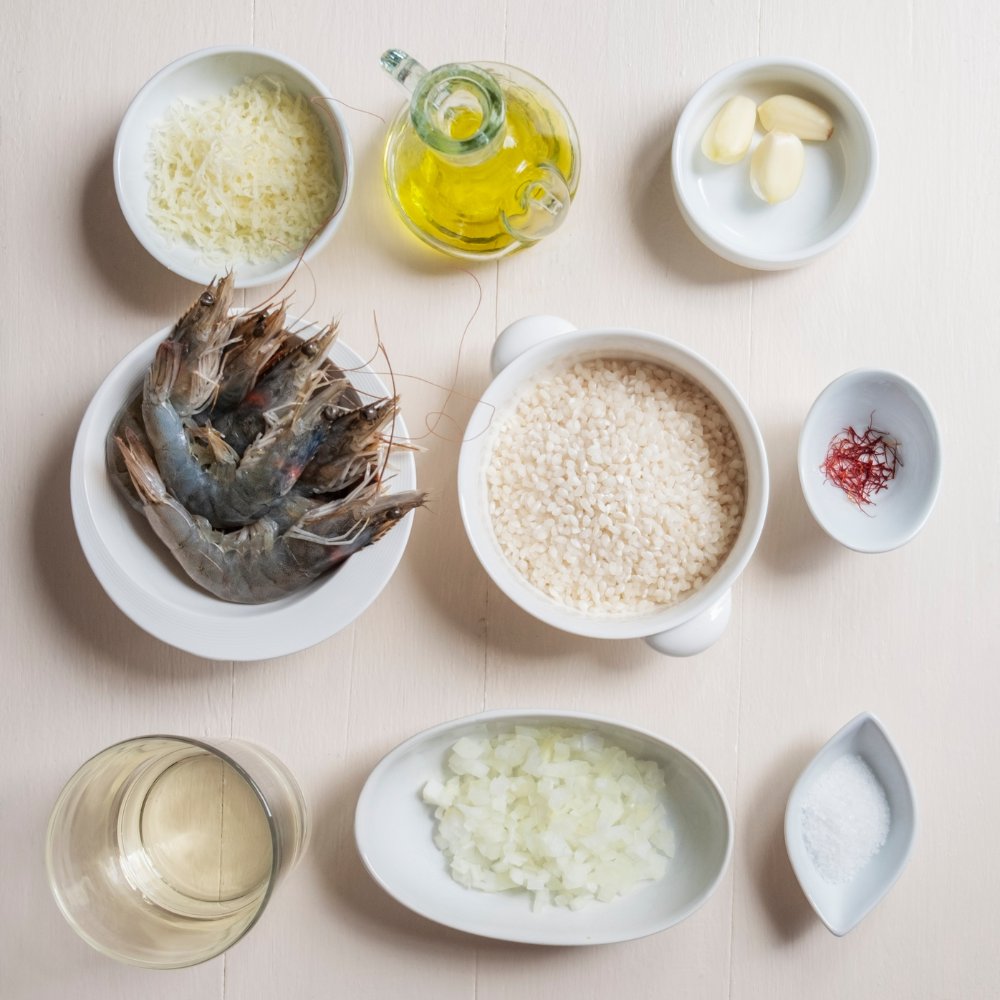
Ingredients for This Risotto Recipe
Olive oil: A good-quality olive oil builds the base of flavor. It adds a peppery note and helps gently soften the aromatics.
Shallots: Shallots bring a mild sweetness that’s softer and more delicate than onion, which works beautifully in a seafood-inspired risotto recipe.
Garlic: Fresh garlic is essential. It adds warmth and depth to the broth and balances the richness of the rice.
Sardines (for the seafood broth): I use sardines to create a rich, ocean-forward broth, but you can use any whole fish or seafood typically used in a seafood boil, lobster tails, crab legs, shrimp, or shellfish.
If you don’t want to go through the whole broth-making process (although it is absolutely worth it), you can substitute it with a homemade, room-temperature vegetable broth or chicken stock with water.
Fresh parsley: It adds freshness and a clean finish.
Dry white wine: Wine deglazes the pan. Choose something crisp and dry that you’d also enjoy drinking.
Saffron threads: Saffron adds a floral aroma and a golden color to the risotto. It’s optional but highly recommended.
Arborio rice: Arborio is the type of rice used for risotto. Its high starch content gives it a signature creamy texture.
Salt and pepper: Essential for balancing and enhancing all the flavors. Always taste as you go.
Parmesan cheese: Freshly grated Parmesan adds richness and a savory finish. Stir it in at the end for that silky, glossy texture that makes risotto so irresistible.
How to Make This Risotto Recipe
Make the Seafood Broth
If you want that deep, ocean-inspired flavor like the risotto I had in Venice, start by preparing a simple homemade seafood broth. It sounds impressive, but it is actually very straightforward.
In a large pot, heat olive oil over medium heat. Add a few smashed garlic cloves and cook until fragrant, about 1 minute. Stir in a few chopped fresh parsley stems. The stems carry a lot of flavor, so do not discard them.
Add whole sardines that have been cleaned, along with any shellfish you like, such as shrimp shells, crab legs, lobster tails, or mussels. You can use a mix of seafood scraps if you have them. Sauté everything gently for 2 to 3 minutes to release their aroma.
Pour in enough cold water to fully cover the seafood. Add a small strip of lemon peel for brightness, avoiding too much of the white pith to prevent bitterness. Bring your pot to a gentle simmer, not a rolling boil. Skim off any foam that rises to the top.
Let the broth simmer uncovered for about 25 to 35 minutes. Season lightly with salt toward the end, keeping in mind that it will concentrate slightly as it cooks.
Strain the seafood broth through a fine sieve, pressing gently on the solids to extract as much flavor as possible. Discard the fish and shells. Keep the broth warm over low heat while you prepare the risotto.
If you want to keep it simple, you can substitute a good-quality vegetable broth, but the homemade seafood broth gives this risotto recipe its signature depth.

Warm the Broth
Keep your strained seafood broth over low heat in a saucepan. It should stay gently steaming but never boiling. Adding hot broth gradually is what allows the rice to cook evenly.
Build the Aromatic Base
In a wide pan or heavy Dutch oven, heat olive oil over medium heat. Add finely chopped shallots with a pinch of salt and cook slowly until translucent, about 4 to 5 minutes.
Add minced garlic and cook until fragrant. This should take no more than 1 minute.
If using saffron threads, soak them in a spoonful of the warm broth for a few minutes to release their color and aroma.
Toast the Rice
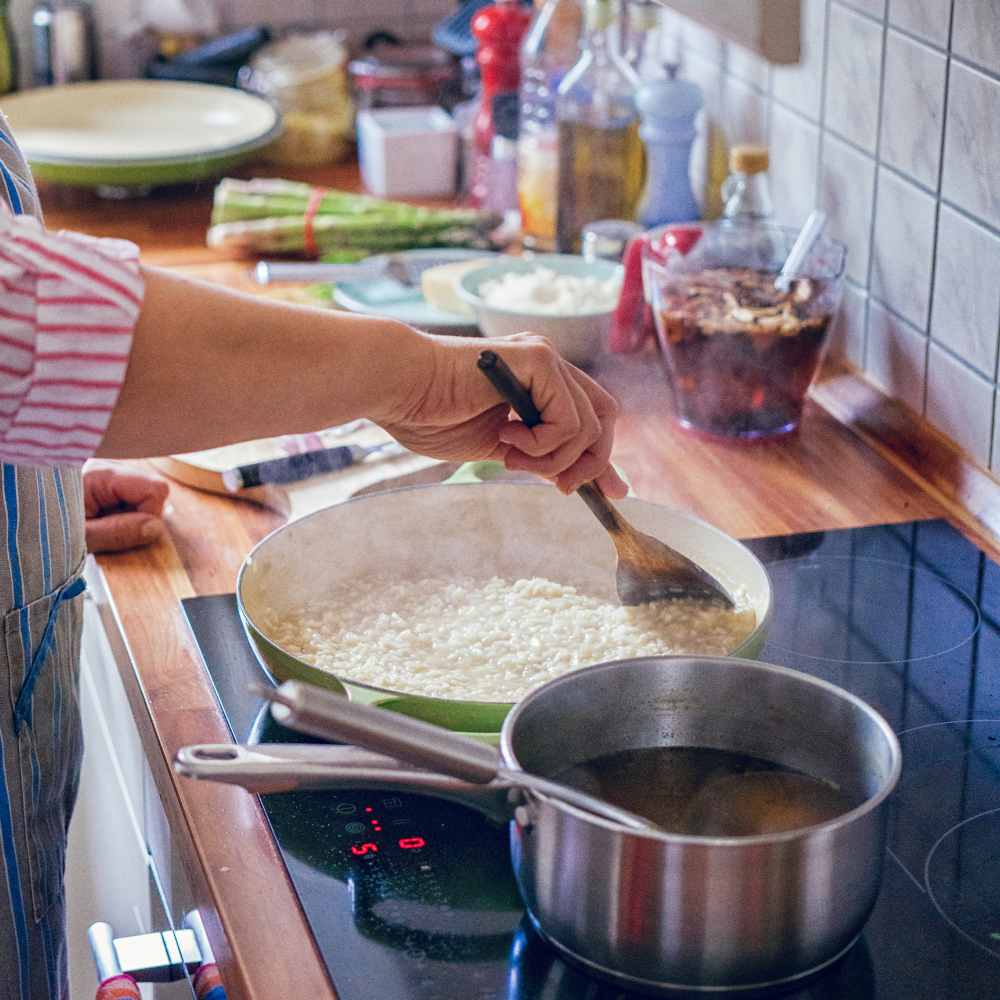
Add the Arborio rice to the pan. Stir continuously for about 2 minutes so every grain is coated in oil and lightly toasted. The edges of the rice should begin to look slightly translucent while the center remains opaque.
Add White Wine
Deglaze your pan with dry white wine, stirring gently. Let it simmer until nearly absorbed.
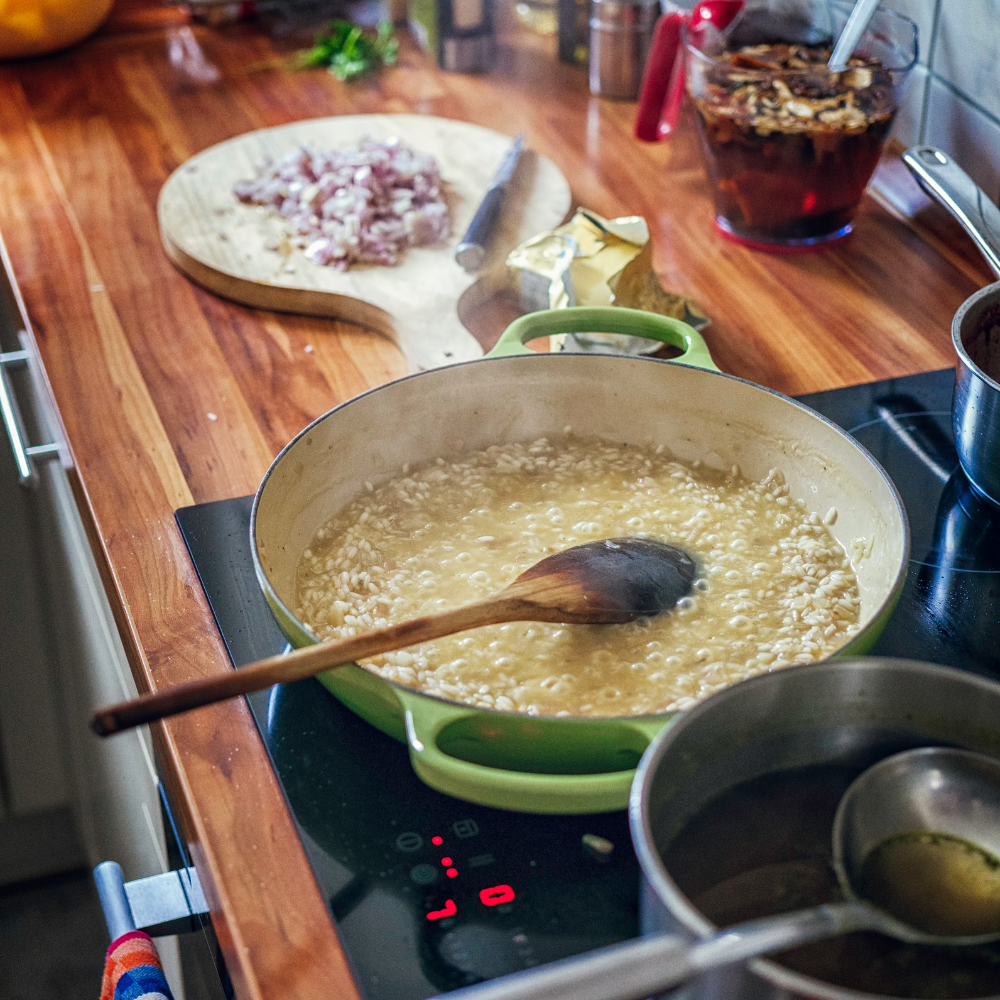
Adding the Liquid Gradually
Lower the heat to medium-low. Add one ladle of warm (vegetable or fish) broth to the rice and stir gently. Let the broth cook down before adding more, stirring regularly.
The rice will release its starch as it cooks, creating a naturally creamy texture without any cream. This step usually takes about 18 to 25 minutes.
If using saffron, stir it into the infused broth early in the cooking process so the color distributes evenly.
Taste as you go.
Finish the Risotto
Remove the pan from the heat. Stir in freshly grated Parmesan cheese and a small drizzle of olive oil. Add chopped fresh parsley and freshly ground black pepper. Adjust salt carefully, especially if your broth was well seasoned.
Let the risotto rest for about a minute, then stir gently once more.
Serve immediately while warm and silky.
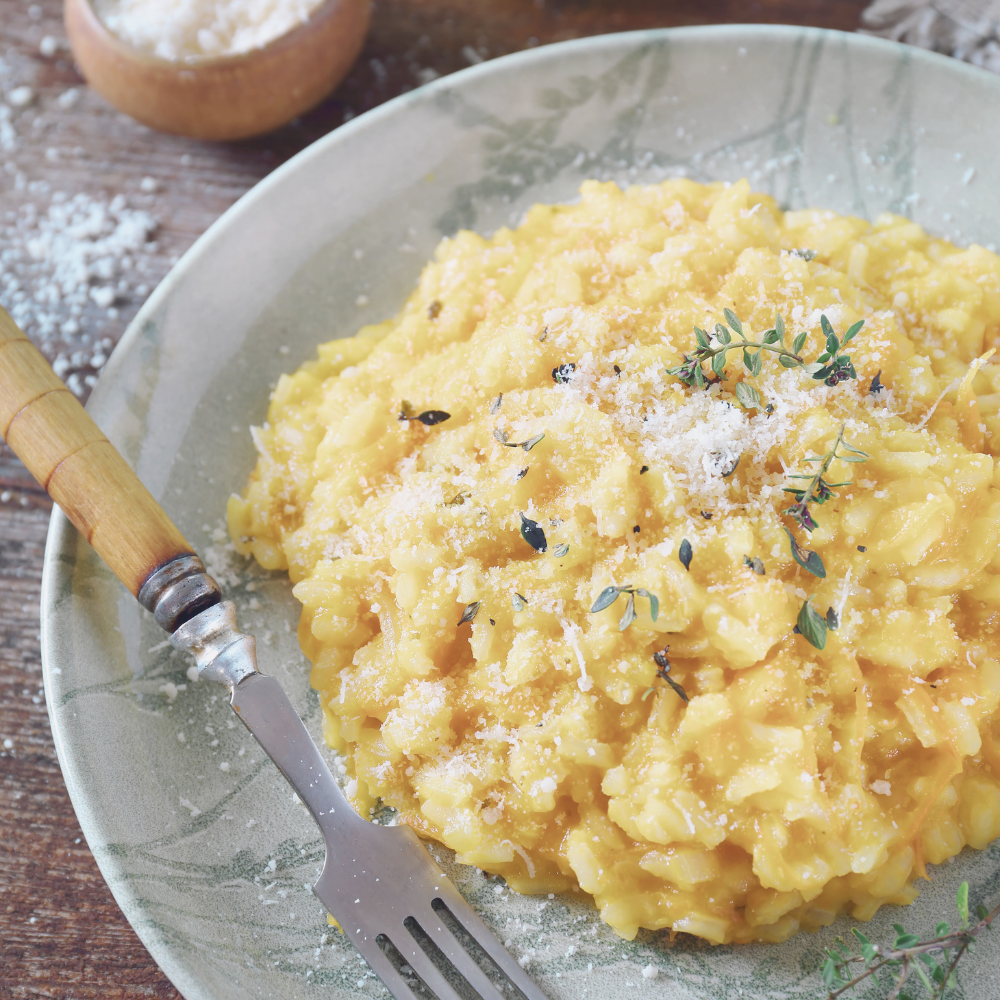
Risotto Recipe Tips and Variations
Arborio rice is essential for a classic risotto recipe because of its high starch content. That starch is what creates the creamy texture without adding cream. Avoid rinsing the rice before cooking, as washing removes the starch needed for that signature consistency.
Cooking time can vary slightly depending on your stove, heat level, and how hot your broth is kept. Most risotto recipes take about 18 to 25 minutes from the first ladle of broth to the final stir. Start tasting around the 18-minute mark. The rice should be tender with a slight firmness in the center, never mushy.
Stirring is important, but it does not need to be aggressive or constant. Gentle, regular stirring helps release starch while preventing the rice from sticking to the bottom of your pan. Keep the heat at a steady medium-low so the liquid simmers softly rather than boiling rapidly.
If your risotto becomes too thick before the rice is fully cooked, simply add a small splash of warm broth or hot water to loosen it.
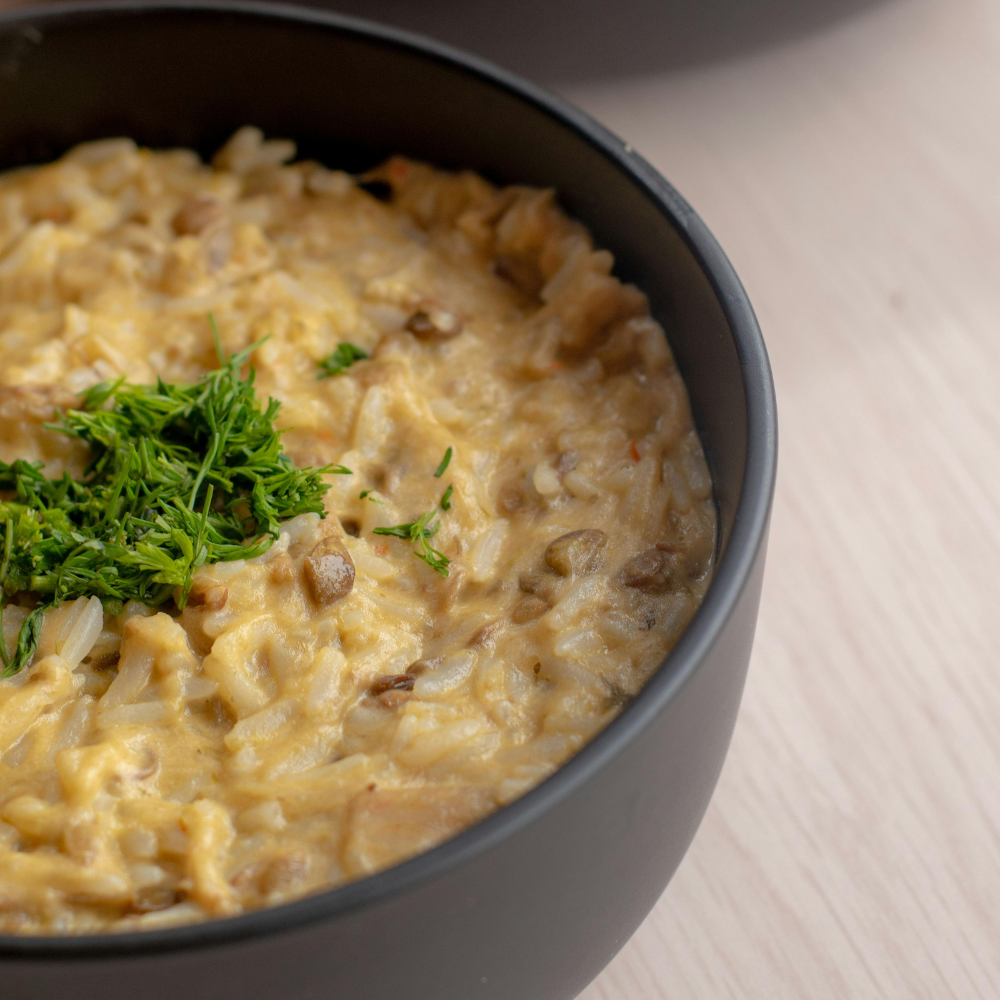
Lemon Risotto
For a fresher finish, add fresh lemon juice at the very end of cooking. Start with a small amount, taste, and adjust. You can also add finely grated lemon zest.
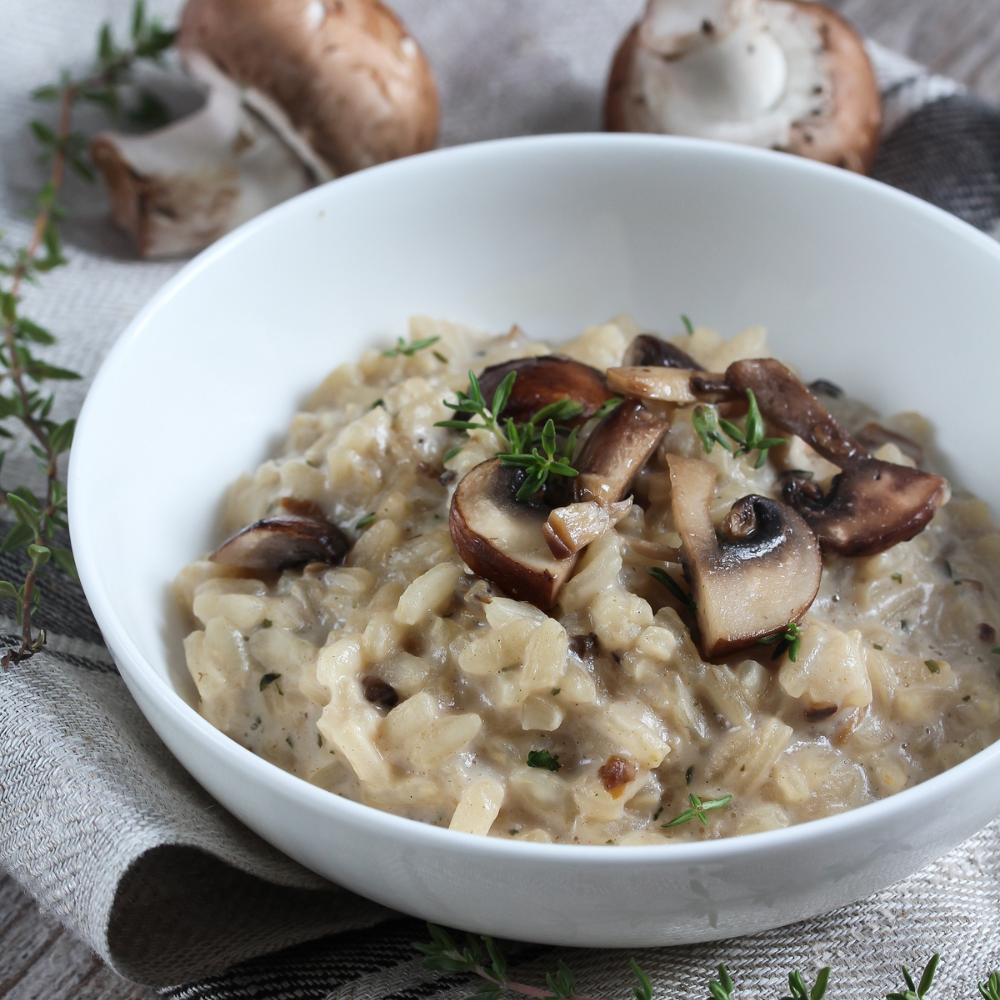
Mushroom Risotto
For a deeper, earthier variation, sauté sliced mushrooms separately in oil with garlic, parsley, and a pinch of salt until golden and caramelized. Stir them into the risotto during the last few minutes of cooking.
Mushrooms add texture and richness while still keeping the dish vegetarian if you swap the seafood broth for vegetable broth. Some extra parsley and Parmesan on top make this version especially comforting.
Storing
Leftover risotto can be stored in an airtight glass tupperware in the refrigerator for up to 4 days. Keep in mind that risotto thickens significantly as it cools. When reheating, add a splash of warm broth or water and stir gently over low heat.
You can also shape cold risotto into small balls, add some cheese in the center, coat lightly in breadcrumbs, and pan-fry until crisp for a simple risotto cake.
How We Serve This Risotto
In our home, this risotto recipe is rarely served on its own. We love to eat it with this simple arugula salad.

Risotto
This risotto is a rich, classic Italian rice dish, slowly cooked in warm broth until perfectly tender. It is made with shallots, garlic, and freshly grated Parmesan for a cream flavor.
Ingredients
- For the Seafood Broth
- 2 tablespoons olive oil
- 5 cloves garlic, minced or smashed
- 1 small handful fresh parsley
- 4-5 whole sardines (or fish heads/bones)
- 1 cup shrimp shells or other shellfish shells (optional but recommended)
- 1 strip lemon peel
- 6 cups water
- Salt to taste
- 2 tablespoons olive oil
- 2 tablespoons butter
- 2 shallots, finely chopped
- 5-7 cloves garlic, minced
- 1 ½ cups Arborio rice
- 2 cups dry white wine
- 4 cups warm seafood broth (from above)
- Pinch saffron threads (optional but traditional)
- ½ cup freshly grated Parmesan cheese
- 2 tablespoons chopped fresh parsley
- Salt and pepper to taste
Instructions
- Heat olive oil in a medium pot over medium heat. Add the smashed garlic, one shallot and parsley and sweat for about 5 minutes over low heat or until fragrant.
- Add the sardines and shellfish shells and cook for two to three minutes, stirring gently so the seafood begins releasing its flavor.
- Pour in the water and add the lemon peel. Bring the mixture to a gentle simmer and cook for about 30 minutes. Skim off any foam that rises to the surface.
- Strain the broth and keep it warm on low heat while you prepare the risotto.
- Heat olive oil and butter in a wide, heavy pan over medium heat. Add the shallot and sweat for about five to six minutes until soft and translucent.
- Stir in the minced garlic and cook over low heat for about one minute until fragrant.
- Add the Arborio rice and stir for about three minutes so the grains become lightly toasted and coated in oil.
- Pour in the dry white wine and stir until the wine has mostly cooked off.
- If using saffron, stir it into a small spoonful of warm broth and add it to the rice.
- Begin adding the warm seafood broth one ladle at a time. Stir gently and allow the rice to absorb most of the liquid before adding the next ladle.
- Continue this process for about 28 to 35 minutes, stirring regularly, until the rice is tender with a slight firmness in the center and the risotto is creamy.
- Remove the pan from the heat and stir in the grated Parmesan cheese
- Taste and season with salt and freshly ground black pepper. If desired, add a small squeeze of lemon juice for brightness.
- Serve immediately while the risotto is warm and creamy.
Notes
- Keep the broth warm while cooking so the rice maintains an even temperature and cooks smoothly.
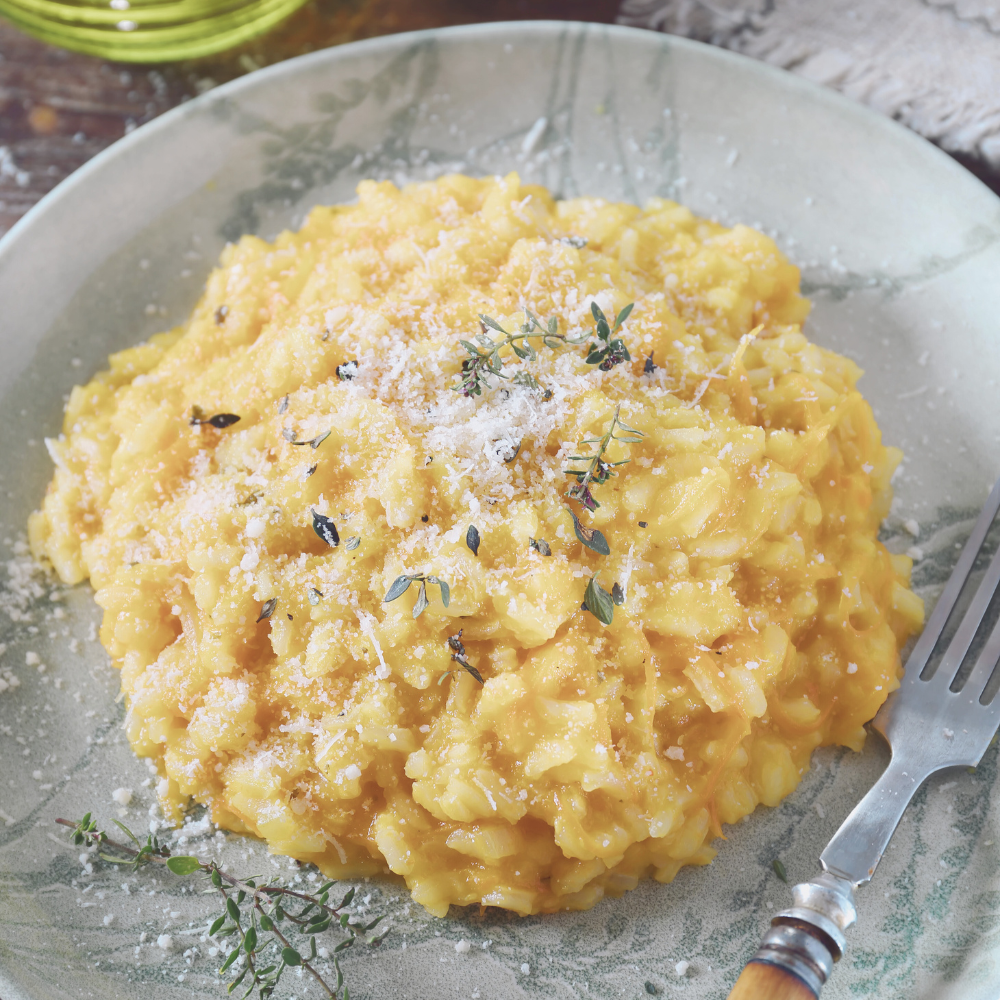
- Risotto should have a creamy consistency that slowly spreads on a plate rather than sitting stiffly in a mound.
Nutrition Facts
Calories
929Fat
28 gSat. Fat
9 gCarbs
93 gFiber
5 gNet carbs
89 gSugar
3 gProtein
52 gSodium
2562 mgCholesterol
45 mgNutrition information is automatically calculated and should be used as an estimate. Use your own calculations when needed.
